Museum Guide News
Museum Guide News

At the Richard I. Bong Museum, experience “Marge,” our beautifully restored P-38 Lightning, stand beside our M60 tank, and enjoy the scenic hiking trail just beyond our grounds. Step into history and immerse yourself in powerful, firsthand accounts from veterans spanning World War II to today.
The Real Top Gun- Born in Superior, Wisconsin, Dick Bong rose to national prominence as America’s greatest fighter ace. During World War II, he shot down 40 enemy aircraft in the Pacific Theater, securing his place in history. Discover the life, courage, and legacy of this remarkable young man.
Plan Your Visit- Join us for guided or self-guided tours and connect with the history that shaped our world. Walk with heroes—visit today. More than a museum, we are a living tribute to those who served, both on the front lines and the home front. Meet our volunteers, hear their stories, and leave inspired.
We host a variety of veteran-focused programs throughout the year, including a Boundary Waters retreat, the service of over 300 Thanksgiving meals annually, and commemorative events for major military holidays. Our outreach extends into the community through veteran-led presentations and demonstrations at schools and organizations. Our educational programs welcome students from across northern Wisconsin and Minnesota, offering hands-on learning through authentic artifacts and direct engagement with veteran experiences. When schools can’t come to us, we bring history to them.
Beyond our local impact, we are committed to a global mission. Mission Marge, launched in 2024, began as an effort to locate Dick Bong’s P-38, “Marge,” which crashed in Papua New Guinea. Since discovering the site, we have worked to honor its historical significance while expanding humanitarian efforts in nearby communities. We look forward to welcoming you any time of the year! https://bongcenter.org/


The Grissom Air Museum rich in history is located, near Peru, Indiana. The museum was founded in 1981, by seven prior service military personnel who lived in the area.
The Heritage Museum Foundation (HMF) wanted to preserve aircraft that were currently located at Grissom Air Reserve Base, formerly Grissom Air Force Base. The HMF started the Grissom Air Museum in 1982 outside of what then was the main gate of Grissom Air Reserve Base. Prior to May 12, 1968, the base was known as Bunker Hill Air Force Base before it was renamed Grissom AFB in honor of Virgil I. “Gus” Grissom, Indiana native and the second American astronaut into space. He perished in the Apollo I fire on Jan. 27, 1967.
Former home of the 305th Bomb Wing (BW) and the 319th Fighter Interceptor Squadron (FIS) and is now proud to be the home of the 434th Air Refueling Wing. The Grissom Air Museum currently offers 29 aircraft and 4 trainers.
While you are at the museum, sit in an F-4 Phantom, H1-Huey Helicopter, and look at a complete Link Trainer used in WWII, the Gen. William Kepner & Gus Grissom Exhibit, and more. Check out the history of the military base that started in 1954 as the Bunker Hill Air Force Base. Then head outside to 28 military aircraft that served from WW II through Today! Visit the museum when we have our Warbird Cruise-In Car Show or any other one of our events. You are encouraged to take photos of your experiences.
The museum is handicap accessible. RV and bus parking are available on the museum premises. Special admission pricing is available for groups of 15 or more guests. Contact us today to learn more about all the exciting possibilities at Grissom Air Museum. (765) 689-8011 and visit us at: https://www.grissomairmuseum.com/home/welcome

The Stuhr Museum is known for providing immersive historical, educational, and cultural experiences. The Museum is located in Grand Island, NE
The Museum is a humanities organization that welcomes visitors of all backgrounds to pursue the story of our collective human experience. Your story is our history. We strive to collect and share the diverse perspectives of the past, connect them to the present, and create a more inclusive future.
Our Founder Leo Stuhr was vitally interested in the history of Hall County, and was a founder of the Hall County Historical Society. In 1960, Stuhr announced that he would donate $25,000 and 35 acres of land on which to build a county museum, thus the beginning of the Stuhr Museum.
As a humanities-based organization, the museum provides visitors with programming and activities that encourage understanding for one another and for their communities. For example, as visitors walk through our historic Railroad Town, they will talk with living historians who share their stories, as well as ways that the entire town works together in order to not just survive, but also thrive.
Community is a central theme at the museum, as is evidenced not only by physical locations such as the town, but also groups such as the Railroad Town Sewing Society, a group of women that come together through shared interests. Stuhr Museum is fortunate to have a strong community of volunteers who give their time to help improve the visitor experience, help in the research department, and assist with various activities throughout the year.
When you visit Stuhr Museum, you become part of our community, too, because we understand that history is ongoing, and your story is part of our history. We look forward to welcoming; please check us out online for more information: https://stuhrmuseum.org/
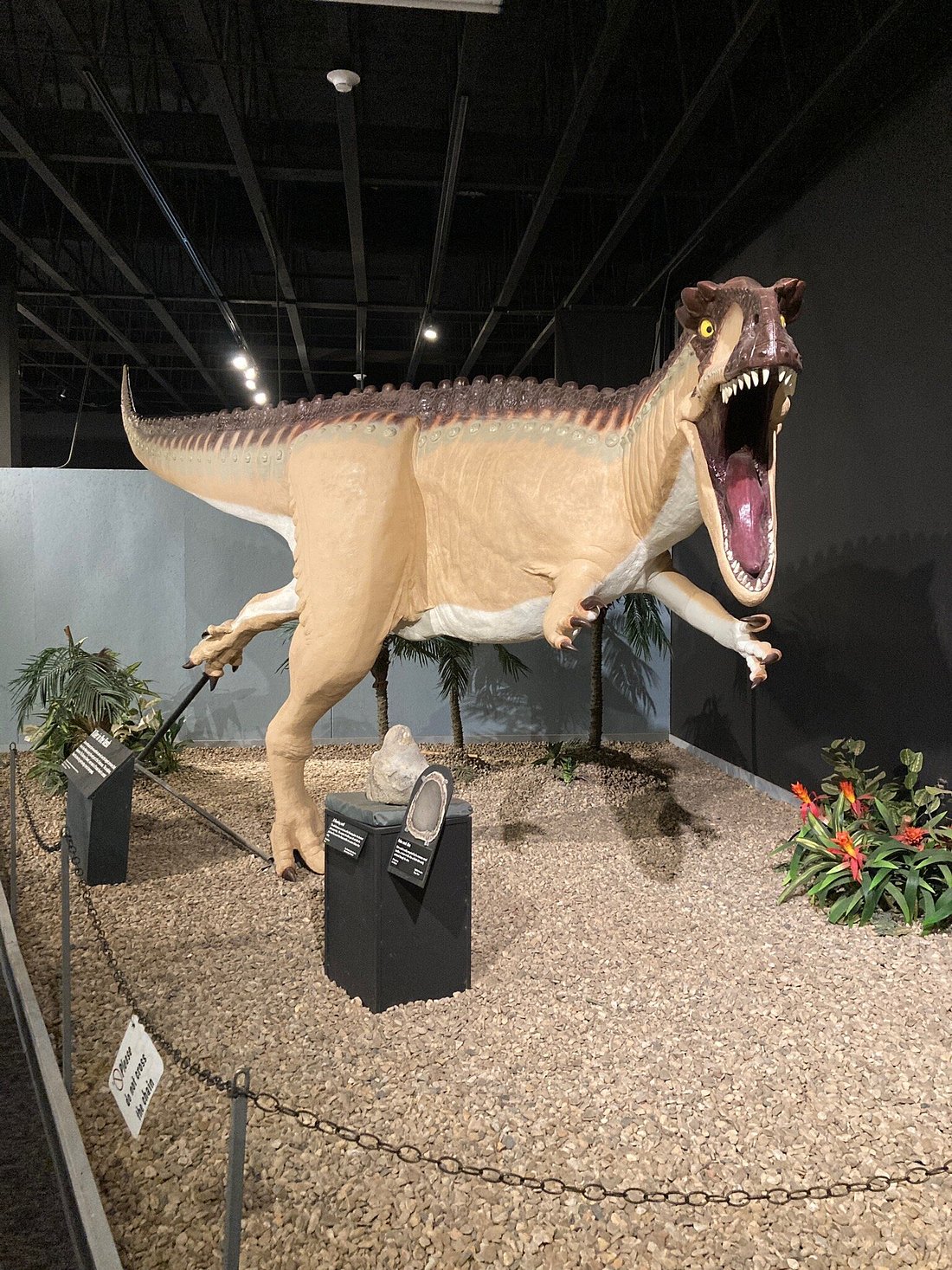
Mesalands Community College’s Dinosaur Museum and Natural Sciences Laboratory opened to the public in May of 2000.
The Museum receives approximately 5,000 visitors each year and our guests represent all 50 states and over 40 foreign countries. Guests to the Museum return year after year to see the changes, improvements, and new exhibits that our staff is continually planning and completing.
The Exhibit Hall at the Mesalands Community College’s Dinosaur Museum houses a host of replicated and original fossils from tiny footprint casts to the 40′ long skeleton Torvosaurus, a rare carnivore relative of Tyrannosaurus rex which hails from the Jurassic period.
The Museum’s focus is on the Mesozoic period, which is also known as ‘The Age of Dinosaurs.’ The Mesozoic is comprised of the Triassic, Jurassic and Cretaceous periods. The museum cultivates specimens from exclusive local dig sites. Guests are able to view Paleontology students and the curator preserve specimens through a viewing window located in the exhibit hall. Witness history as it’s uncovered and assembled in the laboratory.
The museum also boasts an impressive collection of minerals from all over the world. These are displayed in the exhibit hall and sold in the gift shop.
We welcome you to learn more about our Dinosaur Museum and Mesalands Community College, by clicking our website! https://www.mesalands.edu/community/dinosaur-museum/
Mesalands Community College’s Dinosaur Museum222 East Laughlin Street - Tucumcari, NM - (575) 461-6627

The Holocaust Museum & Cohen Educational Center in Naples, FL is teaching the lessons of the Holocaust to inspire action against hatred and to promote mutual respect.
The Museums Vision is to live in a world that values mutual respect, free of antisemitism and hatred. The Museums does this through, displaying artifacts and photographs which tell the individual stories within the larger history of the Holocaust, provide educational programs and activities to students at all grade levels and presenting the general public programs and exhibits that highlight elements of our collection and stories related to the Holocaust and other genocides;
The unique origin of the Museum was a Naples, Florida middle school classroom exhibit created by students and teachers studying the Holocaust called “Out of the Ashes.” The motto of the project was “Tell your children to tell their children and their children another generation. We will never forget!” The students knew the important lessons of the Holocaust must always be shared.
In 2001, the exhibit was transformed into a museum and educational center, operating as a 501(c)(3) not-for-profit corporation. With the focus on education, our programs reach over 15,000 students each year and the Museum hosts more than 5,000 visitors annually. The Golden Gate teachers and students would be so proud of the impact “Out of the Ashes” has had!
Today, the Museum houses over 1,000 original photographs and artifacts related to the Holocaust and World War II. These items are displayed chronologically, from the rise of Nazism to the Allied Liberation and Nuremberg Trials. Many of the artifacts have been donated or permanently loaned to the Museum by local Survivors, Liberators and other dedicated people. Of special interest are the photographs, documents and artifacts that belonged to the families of Survivors and Liberators who now live in Southwest Florida, many of whom are volunteers at the Museum.
The Museum is open Tuesday through Sunday from 1:00 pm to 4:30 pm, with last guest entry at 3:30 pm. The Museum is closed on Mondays and the following major U.S. holidays: New Year’s Day, Memorial Day, Independence Day, Labor Day, Rosh Hashanah, Yom Kippur, Thanksgiving Day, Day after Thanksgiving, Christmas Eve Day, and Christmas. Come Visit us at 975 Imperial Golf Course Blvd., Suite 108, Naples, FL and Check us out online: https://hmcec.org/ 239-263-9200. We look forward to welcoming you!
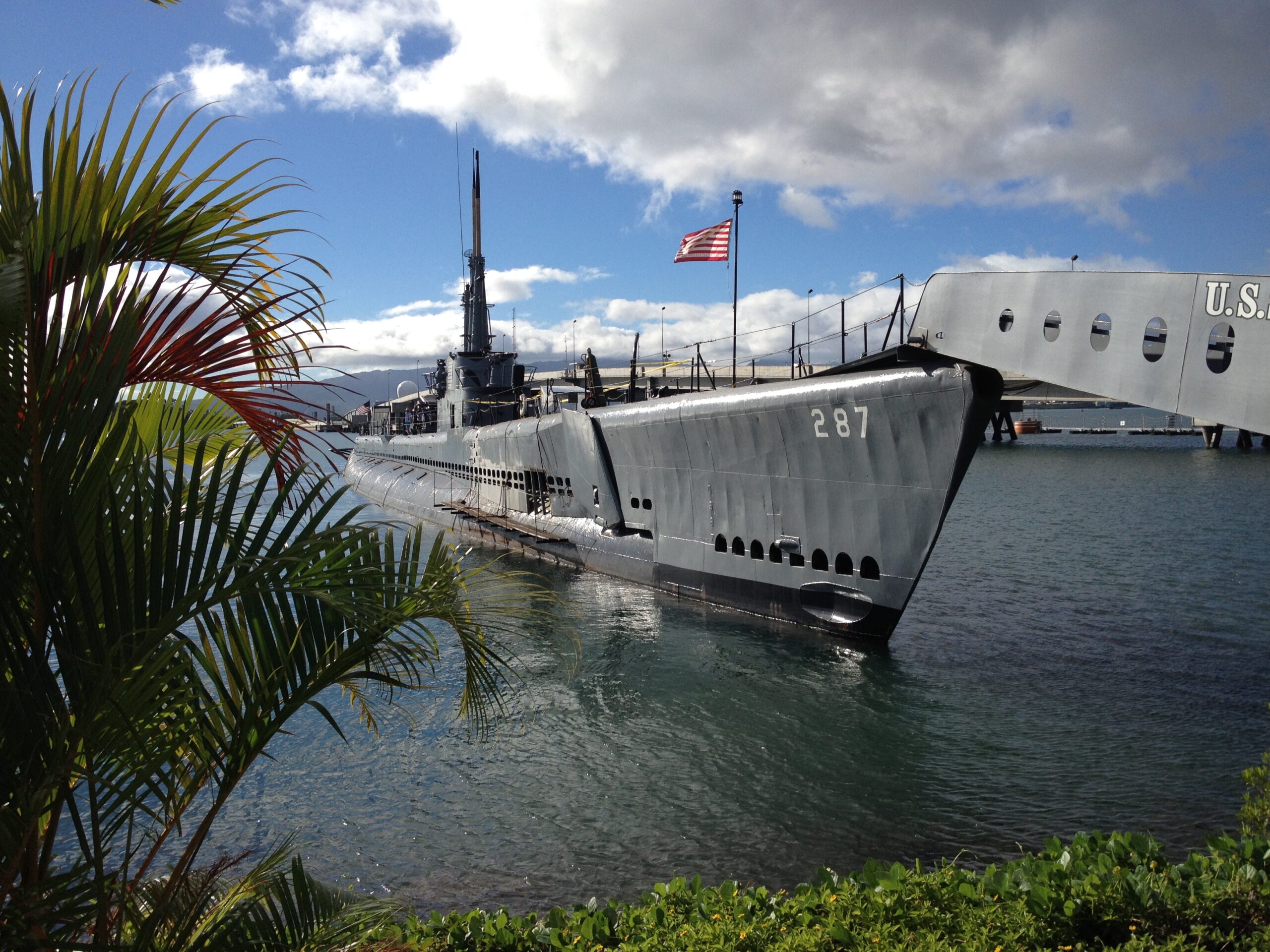
The Pacific Fleet Submarine Memorial Association (PFSMA) was created in 1978 to establish a memorial to the gallant sailors of the Silent Service, and to maintain as a centerpiece of this memorial the Fleet Submarine USS BOWFIN.
In 1979, the PFSMA saved the decorated Balao-class USS Bowfin (SS-287) from scrapping and began the painstaking process of restoring her to her 1945 configuration. The site in Honolulu, HI would become the USS Bowfin Submarine Museum & Park. Bowfin opened to the public in 1981, and an empty dirt lot soon expanded to include numerous outdoor exhibits. In 1986, construction began on a museum facility. In 2021, following extensive renovations, our campus was renamed the Pacific Fleet Submarine Museum.
USS Bowfin (SS-287) is a WWII Fleet Submarine and legend of the Silent Service. She served with distinction on nine successful war patrols between 1943 and 1945, destroying enemy ships in the Pacific, providing assistance to guerillas in the Philippines, and even venturing into the mine-laden Sea of Japan. Launched 7 December 1942, exactly one year after the Pearl Harbor attack, she was appropriately nicknamed “The Pearl Harbor Avenger.”
The museum now offers hands-on, interactive experiences that tell the story of the Silent Service from WWII to the Cold War to present day. In December 2021, USS Bowfin welcomed her 10 millionth visitor. Reopened in 2021 following a $20 million renovation, the Pacific Fleet Submarine Museum tells the story of the U.S. Submarine Force from World War II to the present. Models, weapon systems, photography, battle flags, recruiting posters, and a dissected Poseidon missile. Climb aboard to see how confining and demanding the life of the undersea warrior was. Walk through the forward and aft torpedo rooms, the galley, the wardroom, and the control room – restored to her 1945 configuration.
We are Open Daily from 7 am to 5 pm - Last admission is at 4:30 pm. Closed on New Year’s Day, Thanksgiving, and Christmas! Walk Up Adult General: $25.99 - Walk Up Children (4-12 years): $14.99 - Adult (Military and Kamaʻāina): $18.99 - Child (Military and Kamaʻāina): $9.99
Reservations for General Admission are not required. Prices are subject to change. Military Personnel in uniform are admitted free. We look forward to welcoming you upon you arrival! https://www.bowfin.org/

Constructed in 1936, The El Paso Centennial Museum was built to celebrate the anniversary of Texas independence, making it the oldest museum in El Paso.
Permanent exhibits in the museum focus on the natural and cultural history of the Chihuahuan Desert region, the largest desert in North America, and the ties of friendship that exist between the University and Bhutan can be seen in its surroundings. The Centennial Museum and Gardens sponsor such events as lectures/talks, collaborative exhibits with other museums on campus or in El Paso and FloraFEST
The Centennial Museum prides itself as an academic support and outreach unit of The University of Texas at El Paso focusing primarily on the natural and cultural history of the Chihuahuan Desert. It promotes and shares knowledge and understanding of the natural diversity of the region and its people. The museum meets its responsibilities through the presentation and curation of the permanent collections, including the Chihuahuan Desert Gardens.
The Centennial Museum and Chihuahuan Desert Gardens celebrates the stories of life in the Chihuahuan Desert. We aim to engage the border community with participatory programs and exhibitions that inspire dialogue about and respect for the natural world and our cultural heritage. As a university museum, we expand access to knowledge and opportunities that higher education and cultural engagement can offer.
The Gardens were established in 1999 and are certified as a Texas Wildscape site. With more than 600 species of plants that are native or adapted to the Chihuahuan Desert, visitors can see the plants in their native setting. The Chihuahuan Desert Gardens are visited by thousands of people each year, including international visitors and school children from the region.
We hope you will visit us in El Paso and see and experience our museums and beautiful gardens!
The Centennial Museum is open Monday through Saturday, from 10:00 a.m. - 4:00 p.m., with the exception of holidays and UTEP Football home games. The Chihuahuan Desert Gardens are open daily from dawn to dusk. For additional questions or information please contact us via email at centennialmuseum@utep.edu https://www.utep.edu/centennial-museum/about/about.html
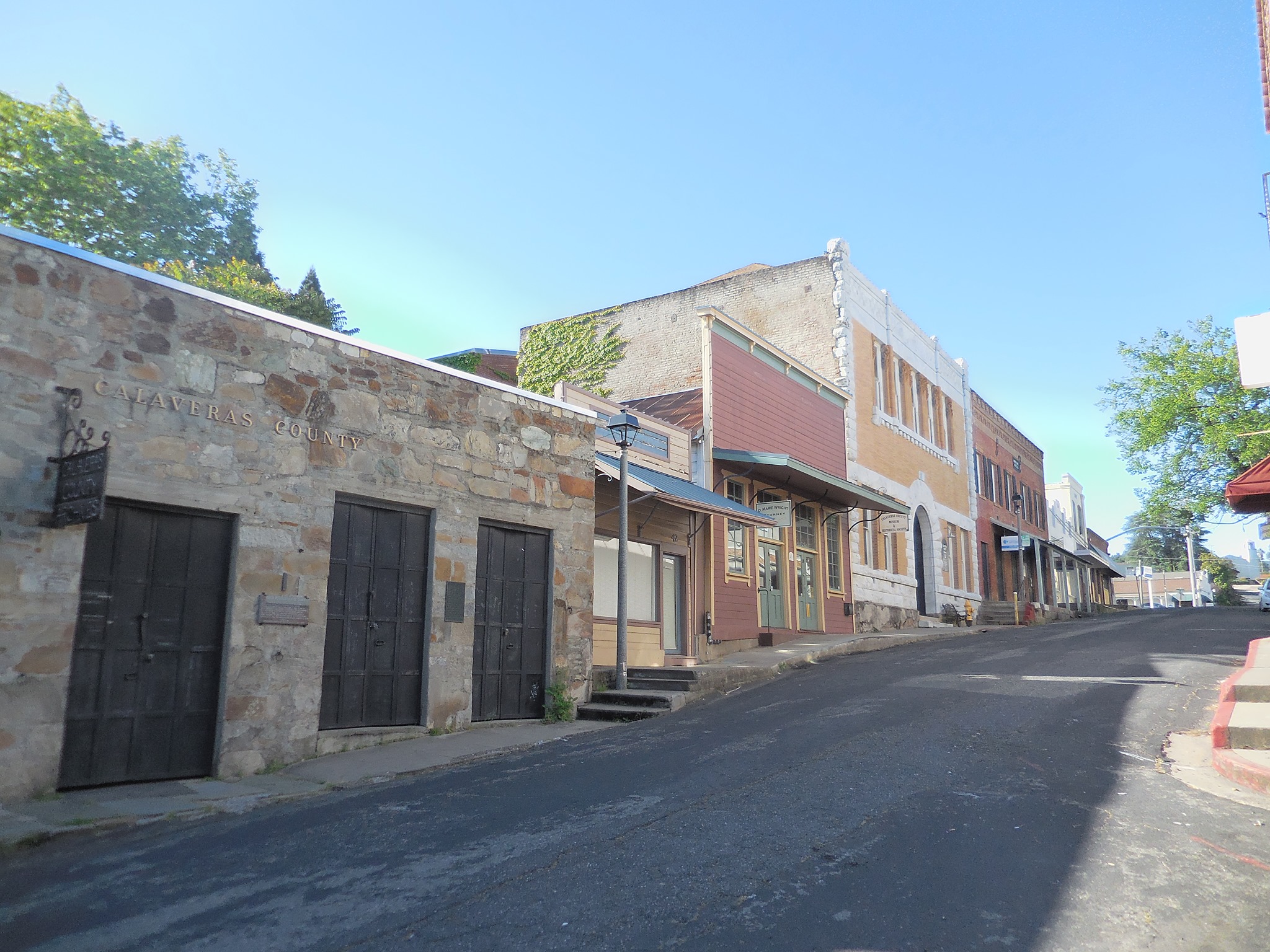
The Calaveras County Historical Society in San Andreas, CA was formed in 1952!
The historical society is a record of past events. Many counties in the State of California have their past events preserved in a written history of the county. This is not true of the county of Calaveras as its history has never been written.
Located in the center of the gold mining district of California, Calaveras is rich in history, tradition, romance, and lore. The early growth and development of the State of California mostly took place in the gold mining districts and Calaveras County contributed its full share. Many persons who later became leaders in the state at one time became gold miners in Calaveras County.
Many descendants of the early residents of Calaveras County are still living, and it is possible to collect from them a vast fund of early history of the county. Many of the issues of early newspapers are no longer in existence, but some of these early newspapers are available in museums and public libraries.
While visiting come see the Calaveras County Museum Complex, which is made up of three historic buildings: The Old Courthouse and Jail - 1867, The Hall of Records - 1893, and The Odd Fellows Hall - 1856. Within these interconnected buildings, the history of Calaveras County is told through objects, portraits, and photographs. Here you will find educational displays that tell the County's pre-history and Tribal culture, the stories of the early-pioneers, and the history of the Gold Rush encompassing the influence of European, Chinese, Mexican and many other cultures and their stories and objects related to mining and other industries in the County. https://www.historicalcalaveras.com/downtown-museum
The prime purpose of the Calaveras County Historical Society is to collect and preserve for posterity the early history of Calaveras County. We invite you to come and visit us anytime where you will see history preserved form years past! Check us out online: https://www.historicalcalaveras.com/

In WHITTIER, AK, an important part of Alaskan history is now back in Alaska.
The Prince William Sound Museum in Whittier, AK has accepted a 1939 Japanese machine gun — called a Nambu — used by Japanese military forces in the World War II Battle of Attu along the Aleutian Islands. Museum Director Ted Spencer said having the gun displayed at the military museum was a lifelong dream, but getting it there was quite a journey.
It started with Lt. Colonel William Lucas, who led the charge to recapture Attu from the Japanese in 1943, earning a silver star in the process. The battle itself was bloody; the museum has the names of more than 500 American soldiers who died in the only World War II land battle to be fought on the North American continent. The Americans prevailed and the Japanese retreated, leaving some of their weapons behind. That, Spencer said, was how Lucas got the gun. It went with him to his home in Virginia where it stayed in a closet for nearly 80 years until it was eventually passed down to a granddaughter. “So, she contacted us and said, ‘Hey, would you like to have this gun for display?’ And of course, it was a big dream for me to have something from the battle of Attu,” Spencer said.
But there were complications; because the machine gun had never been registered with the federal government, the Bureau of Alcohol, Tobacco, Firearms and Explosives wanted to melt it down. Elaina Spraker, a staffer with Sen. Dan Sullivan’s office, worked to convince the agency the gun was a historic relic. It eventually agreed to transfer ownership to the City of Whittier. Sullivan recently toured the Whittier Museum, seeing the gun for the first time in person. “To be able to have an original machine gun, [a] Japanese machine gun that was in that battle, you know we lost a lot of American service members,” Sullivan said. “To have that as a remembrance of the service and sacrifice — which is really what this museum is all about — it’s really powerful.”
Here is a video link to more information on this Japanese Machine Gun - https://www.alaskasnewssource.com/2024/08/14/wwii-japanese-machine-gun-battle-attu-is-returned-alaska/
Spencer said he hopes the gun will shed new light on a battle that many Americans are unfamiliar with. He called it an important piece of history in which Alaska played a vital role. To view and learn more about this extraordinary Japanese machine gun and other historic WWII exhibits and the role Whittier, AK played in the war, come visit the Prince William sound Museum and check us out online! https://www.pwsmuseum.org/
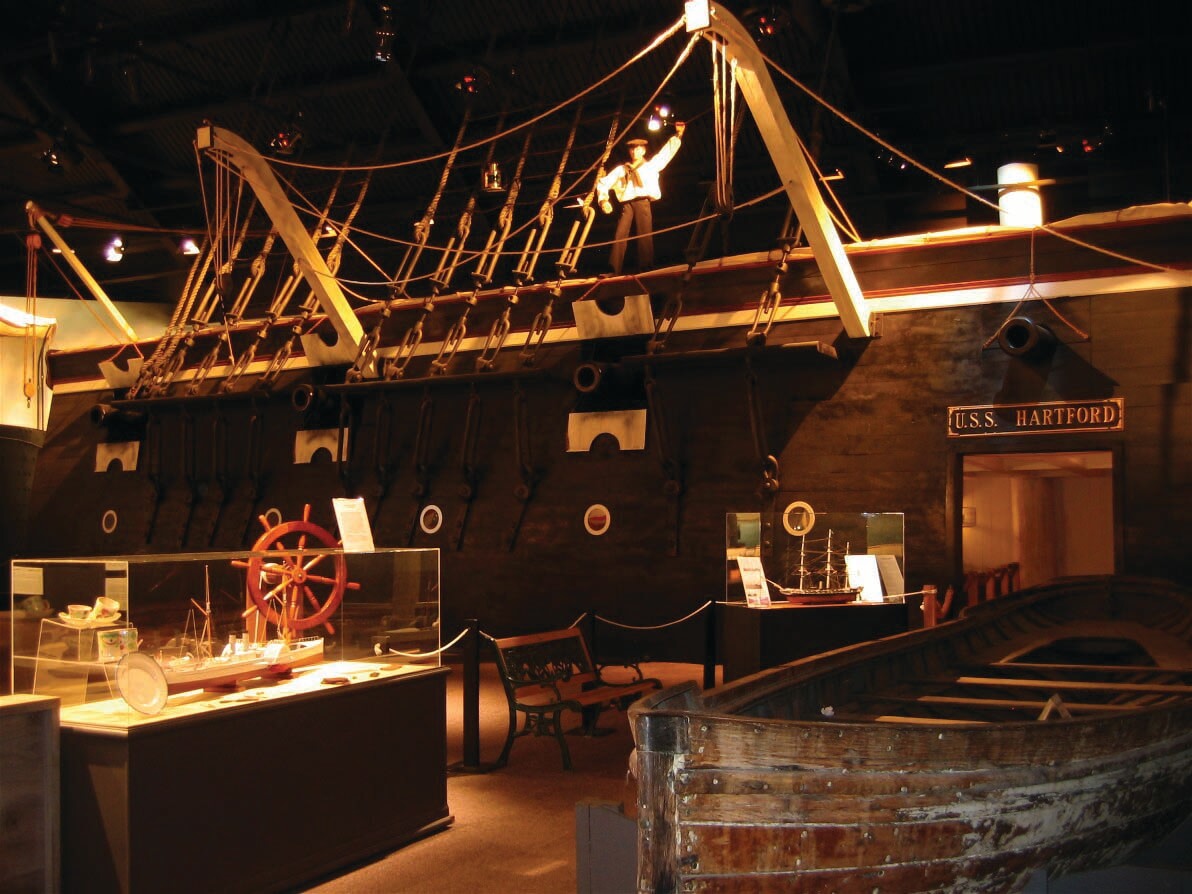
Welcome to the National Civil War Naval Museum in Columbus, Georgia, where history comes alive along the scenic Chattahoochee River.
This year, we proudly celebrate the 25th anniversary at our current location. Discover the remains of the warship, CSS Jackson, and explore our impressive collection of artifacts and immersive walkthrough exhibits, including replicas of the USS Hartford and the CSS Albemarle.
With the nation's largest array of Civil War naval-related flags, our main gallery invites you to experience this pivotal chapter in American history. We feature engaging events, lectures, tours, and live demonstrations throughout the year. https://www.portcolumbus.org/exhibits-events
When you visit us, you will want to experience one of our immersing tours. Below is a list of them to consider when coming! ForTours - Call 706-221-1782, book your group today! Group tours must be scheduled in advance. Admission included.
- VIP Tour – $75 + tax per group of up to 5 people – guided – tour time: 1 hour – Take a private guided tour of the museum and discover the unique exhibits. Your personal guide will focus the tour and discussion on the Union Navy blockade and the fledgling Confederate Navy. A great opportunity for history enthusiasts of all ages to explore the important role of the navies in the Civil War.
- Stroll the Decks – $8 + tax per person (20 minimum) – self guided – recommended tour time: 1 hour – A museum interpreter will give a brief introduction to the museum and provide background information about the navies in the Civil War. Guests will then explore the galleries at their leisure.
- A Sailor's Life – $8 + tax per person (20 minimum) – with guide – tour time: 1 hour 30 minutes – A museum interpreter will take the group through exhibits of the nation’s most unique collection of Civil War naval artifacts revealing the history of the navies at war. They will share exciting stories of battles and of the ships and Sailors who fought them. Walkthrough ship reproductions will bring to life the experience of wartime Sailors.
- African-Americans & Civil War Navies – $8 + tax per person (20 minimum) with guide – tour time: 1 hour 30 minutes – An interpreter will introduce guests to this unique museum housing an impressive collection of Civil War naval artifacts. Visitors will then be led on a tour of the museum's exhibits highlighting the African American experience with stories of Sailors and those affected by the war. The guide will answer questions and provide context about the navies in conflict.
Come visit us soon and in the meantime check out our website at: https://www.portcolumbus.org/
Museum Hours: Mon-Sat 10:00am-4:30pm and Sun 12:30pm-4:30pm - Closed New Years, Easter, Thanksgiving & Christmas